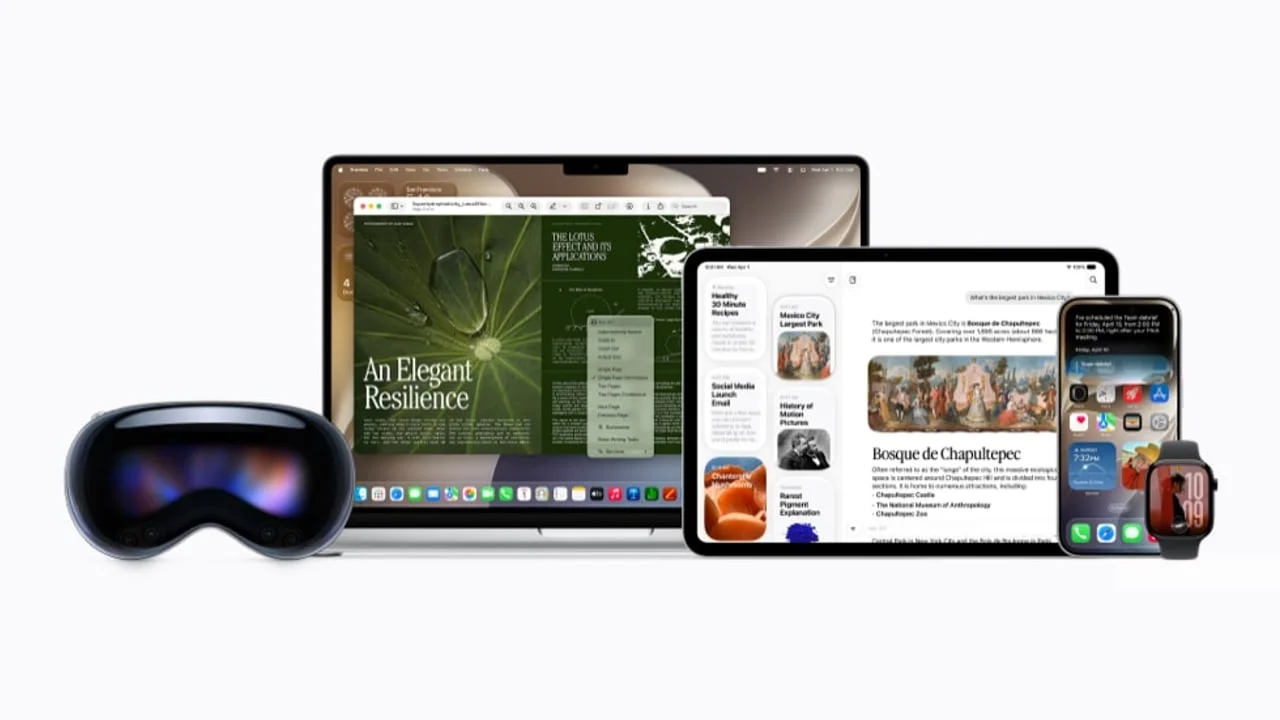
VP-Level FAANG Signals: Local Models, Personal AI, Production Agents
A weekly altitude scan of public signals from VP-level and equivalent FAANG leaders. This issue shows AI discussion moving from model demos toward deployment topology, privacy architecture, production-grade agents, and governance inside creative ecosystems.

Research Brief
Coverage note
This launch issue covers the latest observable seven-day window, June 3-9, 2026 Pacific Time, rather than a Monday-to-Monday production run. The monitor found timestamped public signals from X and official public-talk or newsroom sources; LinkedIn pages were searched, but only items with defensible dates and direct public access were treated as in-window evidence.
Executive read: the altitude shifted from model demos to operating systems
The clearest pattern this week is not another benchmark race. VP-level and equivalent leaders at Amazon, Apple, Netflix, and Google were framing AI around production surfaces: local models that run close to the user, agents that need operating discipline, assistants embedded across personal context, and creative tools that must fit existing industry rules.
For early-career technologists, that changes the prep question. Instead of asking, "Which model is best?", ask: Where will this capability live, who is accountable when it acts, and what constraints make it trustworthy at scale?
| Signal | Leader altitude | What they were pointing at | Practical read for early-career tech professionals |
|---|---|---|---|
| Local multimodal models | Jeff Dean, Chief Scientist, Google DeepMind and Google Research | Gemma 4 12B can run directly on a laptop | Edge deployment, latency, privacy, and cost are moving into mainstream product discussions |
| Personal AI operating layer | Craig Federighi, SVP Software Engineering, Apple | Siri AI and Apple Intelligence across messages, mail, photos, apps, and Private Cloud Compute | Product work will increasingly require privacy architecture literacy, not just feature intuition |
| Production-grade agents | Swami Sivasubramanian, VP Agentic AI, AWS | AWS Summit NYC keynote centers agentic systems, developer modernization, and security | Agent work is becoming platform engineering: identity, observability, latency, replayability |
| AI inside creative ecosystems | Larry Tanz, VP Content EMEA, Netflix | AI rules should protect people and rights without freezing low-risk creative use cases | Tech strategy is inseparable from regulation, labor markets, and partner incentives |
Signal 1: Google's local-model push is really about where intelligence runs
Jeff Dean pointed followers to Gemma 4 12B, calling it "a super capable open weights model that can run directly on your laptop" on June 4 1. Google's own launch post, published June 3, says Gemma 4 12B is a unified, encoder-free multimodal model designed for 16GB laptops, with native audio inputs, Apache 2.0 availability, and support across Hugging Face, Kaggle, Ollama, LM Studio, llama.cpp, MLX, SGLang, vLLM, and other developer tools 2.
Loading content card…
The VP-level read: local inference is no longer only a hobbyist or cost-saving story. It is a deployment topology story. If a capable multimodal model can run near the user, product leaders get new options around privacy, offline reliability, personalization, and latency. Infrastructure leaders get a different cost curve. Security leaders get a different threat model.
For someone early in a tech career, the useful prep is not to memorize Gemma's benchmark table. Learn the tradeoff language: when should inference happen on device, in a private cloud path, at the edge, or in a central service? That question is likely to show up in design reviews before the exact model name does.
Signal 2: Apple's AI message is "personal context, but with architecture attached"
Apple's June 8 Apple Intelligence announcement put Craig Federighi's framing in unusually explicit architectural terms: helpful AI should be centered on user needs, integrated into daily products, grounded in personal context, and built with privacy at every step 3.
Apple's separate Siri AI announcement says the rebuilt assistant uses personal context, onscreen awareness, broad world knowledge, the Spotlight index, App Toolbox, on-device models, and Private Cloud Compute; developer testing starts immediately, with a user beta later in 2026 4.
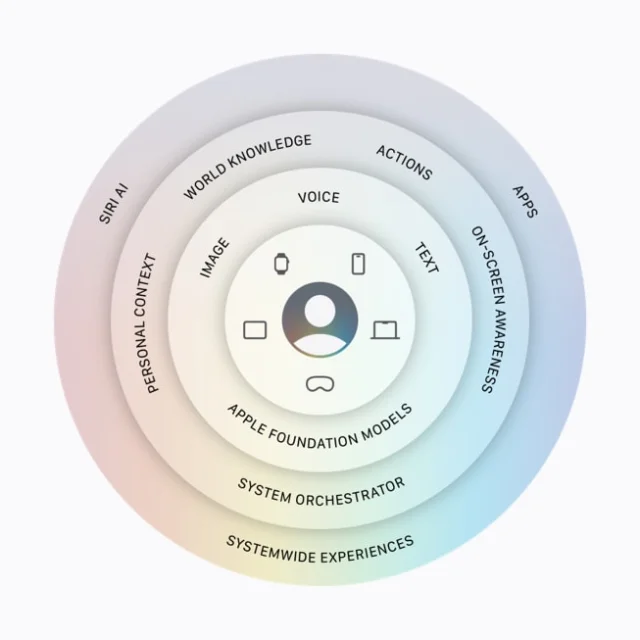
The altitude signal is that Apple is trying to make AI feel like an operating-system layer, not a separate chatbot destination. The product surface is wide: Safari, Passwords, Messages, Mail, Calendar, Home, Photos, Siri, and Shortcuts. The constraint is also wide: privacy, device eligibility, regional rules, third-party app integration, and user trust.
If you work on product, infra, data, security, or developer experience, this is the kind of brief a VP cares about: how the user benefit survives contact with system boundaries. The implementation details differ by team, but the leadership question is the same.
Signal 3: AWS is teaching agents as an operating discipline
AWS's official Summit New York City page, updated June 8, puts agentic AI at the center of its June 17 event. The keynote speaker list names Dr. Swami Sivasubramanian as Vice President, Agentic AI, AWS, and the keynote description says AWS will discuss agentic systems for developers, workload modernization, and security 5.
The event page also highlights 200+ sessions and an "8-bit Agents Activation" where attendees build and deploy AI agents in minutes. That matters because AWS is not only selling model access. It is packaging agents as something builders must operationalize: sessions, tool access, security, observability, and deployment paths.
The career implication is concrete. If you want to sound prepared in an executive review, do not pitch agents as magic workflows. Bring the boring-but-critical checklist: identity, permissions, audit trails, test harnesses, latency budgets, fallback behavior, and cost controls. That is the difference between an impressive demo and something a VP can defend in production.
Signal 4: Netflix framed AI as a policy and ecosystem question
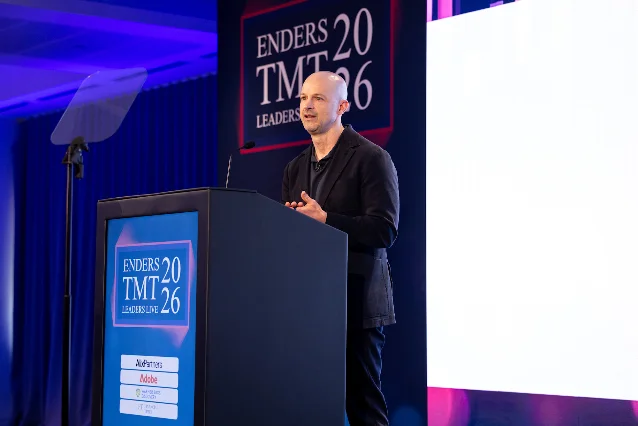
Larry Tanz, Netflix's VP of Content for EMEA, used a June 4 Enders TMT Leaders Live keynote to argue that AI should be evaluated by whether it helps creators make better stories and helps audiences find them. He also said Netflix cares about copyright, fair compensation, consent around realistic digital replicas, and transparent use of AI in ways that support human creators rather than replace them 6.
This is the non-obvious FAANG signal for technical readers. The AI discussion is no longer contained inside model labs or product roadmaps. At VP level, the question includes partner ecosystems, regulation, labor displacement, compensation models, and market structure.
If you are early in your career, this is a reminder to widen your analysis. A technically plausible AI feature may still fail if it creates the wrong incentives for creators, suppliers, regulators, or customers. The stronger habit is to pair a technical claim with its adoption constraints: who has to trust it, who could be harmed, and what governance mechanism makes the risk acceptable?
What to pre-align on this week
Three operating assumptions would prepare you for the conversation at VP altitude:
- AI is becoming a placement decision. Google emphasizes capable local models; Apple emphasizes on-device plus private cloud; AWS emphasizes deployable agent systems. The serious question is where intelligence should sit in the stack.
- Agents are moving from demo language to systems language. The terms to watch are identity, observability, latency, replayability, and security, not just autonomy.
- Governance is part of product-market fit. Netflix's framing shows that for high-creativity industries, the acceptable path for AI depends on rights, consent, compensation, and local ecosystem health.
For the coming week, track less of the "AI can do X" discourse and more of the operating envelope around X. The leaders above are not just pointing at capabilities. They are defining the conditions under which those capabilities can be trusted, distributed, and defended.
Add more perspectives or context around this Post.